

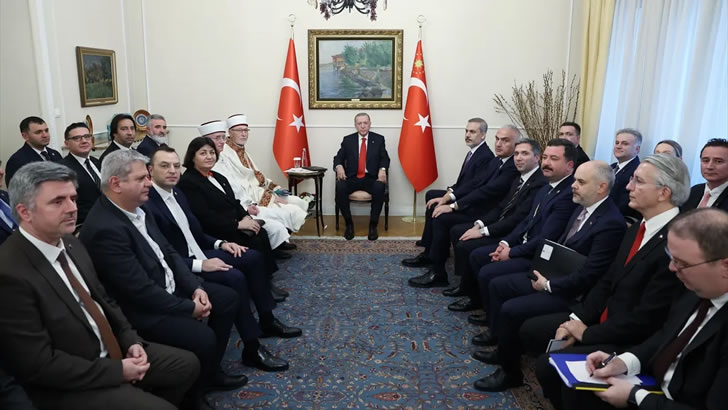
Sunday’s Zaman: “Batı Trakya Türkleri hala tanınma mücadelesi veriyor”
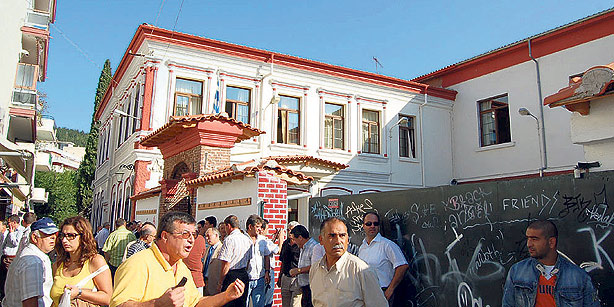
Türkiye’de İngilizce olarak yayınlanan Sunday’s Zaman gazetesi, Batı Trakya Müslüman Türk Azınlığı’nın sorunlarına geniş bir şekilde yer verdi. Gazetenin birinci sayfasında da yer verilen haberde, Batı Trakya Türkleri’nin milli kimliğin inkarı, dernekleşme özgürlüğü, 19. Madde mağdurları, eğitim sorunu ve din özgürlüğü alanında karışlaşılan sorunlara yer veriliyor.
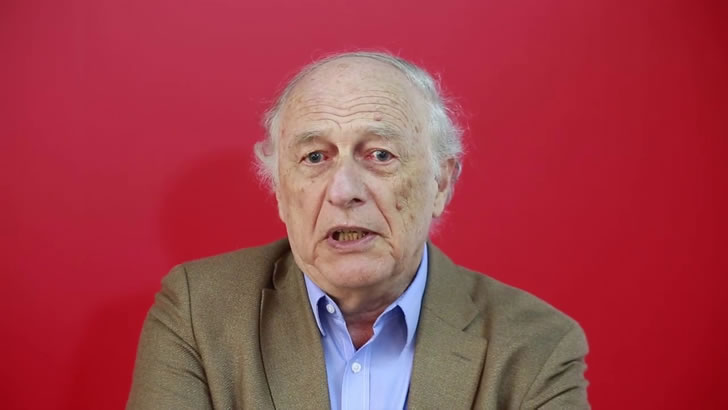
Haberde DEB Partisi Genel Başkan Yardımcısı Ozan Ahmetoğlu, Batı Trakya Türkleri Dayanışma Derneği Genel Başkanı Burhanettin Hakgüder, Rodop-Meriç Genişletilmiş Bölge Valiliği eski vali yardımcısı Rıdvan Kocamümin ve Türkiye’nin Gümülcine Başkonsolosu Mustafa Sarnıç’la yapılan görüşmelerden elde edilen bilgilere yer veriliyor.
60 BİN TÜRK VATANDAŞLIKTAN ÇIKARILDI
19. Madde sorununa geniş şekilde yer verilen yazıda 19. Madde nedeni ile yaklaşık 60 bin Batı Türkünün vatandaşlıktan çıkarıldığı belirtiliyor. 19. Madde mağdurlarından biri olan Batı Trakya Türkleri Dayanışma Derneği(BTTDD) Genel Başkanı Burhaneddin Hakgüder, “Pasaportumun süresinin dolduğunu fark ettim, İstanbul’da Yunan Konsolosluğu’na pasaport süremin uzatılması için başvurdum. Altı ay sonra konsolosluktan aldığım cevapta Yunan vatandaşlığından çıkarıldığımı öğrendim.” şeklindeki ifadesine yer verildi.
Geçmişte temel vatandaşlık hakları konusunda yaşanan sıkıntıların özellikle 1991’den sonra bir çoğunun ortadan kalktığı belirtilen yazıda, azınlık hakları konusunda hiç bir ilerlemenin kaydedilemediği belirtiliyor.
“TÜRK” ve “AZINLIK” KELİMELERİNE YASAK
Dostluk, Eşitlik ve Barış Partisi Genel Başkan Yardımcısı Ozan Ahmetoğlu’nun görüşlerine yer verilen yazıda, vatandaşlık haklarının aksine Lozan Barış Anlaşması ile koruma altında olması gereken azınlık hakları alanında gelişme olmadığını ifade ediyor. Dernekleşme özgürlüğü alanında yaşanan sorunlara dikkat çekilen yazıda, AİHM kararlarına rağmen isminde “Türk” veya “azınlık” kelimesini içeren derneklerin yanı sıra isminde “azınlık” kelimesi bulunan derneklerin de kurulmasına izin verilmediği ifade ediliyor.
EĞİTİM SORUNU DEVAM EDİYOR
Azınlığın en önemli sorunlarından biri olan eğitim sorunun bugün de devam ettiği belirtilen yazıd, anaokuları, ilkokullar, orta öğretim ve üniversite eğitiminde yaşanan sorunlara değiniliyor.
Yazıda, Türkiye’nin Gümülcine Başkonsolosu Mustaf Sarnıç’ın Selanik Özel Pedagoji Akademisi’nin kapatılmasından sonra bu yıl ilk defa 21 azınlık öğrencisinin Selanik Aristotelio Üniversitesi’nde öğrenime başladığını, bu yenilikle azınlık okullarında öğretmenlik yapacak kişilere daha iyi bir eğitim sunması ümit edildiği ve olumlu bir gelişme olduğu şeklindeki ifadelerine yer veriliyor.
Devletin azınlığa yönelik uyguladığı eğitim sistemininin “eğitmeme” ye dayandığı ifade edilen yazıda azınlığın azınlık okullarında uzun zamandan beri uygun bir eğitim alamadığı belirtiliyor.
AZINLIK ANAOKULLARI YOK
Mecburi eğitime dahil edilen anaokulu eğitiminden azınlık çocuklarının mahrum bırakıldığı ifade edilen yazıda, azınlığın Türkçe ve Yunanca eğitim vercek azınlık anaokulları talebine Yunan devletinin cevap vermediği ve Türk çocuklarının sadece Yunanca eğitimin verildiği Yunan anaokullarına gitmeye mecbur kaldığı belirtiliyor.
Yazının sonunda ise ekonomik krizin milliyetçi duyguların artmasına neden olduğu, Yunanistan’da kültürel ve ekonomik anlamda ezilmiş kesimini oluşturan Batı Trakya Türk Azınlığı için pembe bir tablo çizmenin zor olduğu ifade ediliyor.
TURKS OF WESTERN THRACE STILL STRUGGLING FOR RIGHTS, RECOGNITION
“I was a student in the Law Faculty of İstanbul University. It was March 1981, and I was preparing for the midterms.
I noticed that my passport had expired, so I applied to the Greek Consulate in İstanbul for the extension of my passport. Six months later I was told by the consulate that I had been deprived of my Greek citizenship.” These are the words of Burhaneddin Hakgüder, who has been living in Turkey ever since, and is the president of the Western Thrace Turks Solidarity Association, headquartered in İstanbul. Hakgüder was not the least bit aware of the Greek government’s intention before he was told by the consulate that his citizenship had been taken away. He had committed no crime, no wrongdoing whatsoever with respect to Greek law, to deserve any such action, nor did he want to abandon his Greek nationality. “I wasn’t allowed to go to my native land for 17 years,” he told Sunday’s Zaman. Hakgüder, who suddenly found himself stateless, is but one of the victims.
Thousands of people from the Turkish minority living in Western Thrace have been victimized by the now-repealed Article 19 of the Greek Nationality Code, losing all of their rights as Greek citizens. The former Article 19, which was in effect between 1959 and 1998, read as follows: “A person of non-Greek ethnic origin leaving Greece without the intention of returning may be declared to have lost his or her Greek nationality.”
In fact, the total number of “Greek citizens of non-Greek descent” who lost their citizenship under the law is given as 60,000, including minors, in various reports such as the European Commission against Racism and Intolerance’s (ECRI) and that of the Council of Europe. Ethnic Turks from Western Thrace formed the major group of victims, with 50,000 losing Greek citizenship. Quite a few of these people found out they had lost their citizenship when they returned to the Greek border from a visit of only a couple of days in Turkey, spent with relatives or visiting a son studying at a university in Turkey. The infamous Article 19 was abrogated long ago, but because its repeal was not retroactive, thousands of stateless minority members are still unable to regain their Greek citizenship, unjustly taken away by the Greek authorities, and have been paid no compensation.
The actions of the Greek authorities in denying these people their citizenship goes against both the Universal Declaration of Human Rights, which declares, “No one shall be arbitrarily deprived of his nationality nor denied the right to change his nationality.” It is in view of such unjust treatment that the ECRI criticized Greece in its report published in September 2009.
Greece’s Turkish minority has seen hard times in the past. They were arbitrarily denied driver’s licenses and were not allowed to buy real estate, run shops or restore their houses. The minority group, most of whom who still earn their livings in agriculture, was even denied driver’s licenses for tractors. Police issued fines when they caught Turkish farmers in tractors plowing their own fields. But those days are now over, with new regulations introduced since the 1990s. The Turkish minority no longer feels under so much pressure. But there still remain some major problems to be solved for the minority, such as identity, education and the election of a religious leader (mufti) for the Turkish community.
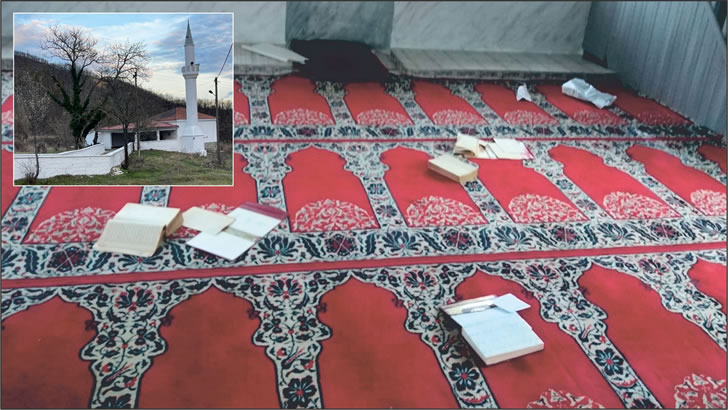
According to Ozan Ahmetoğlu, the vice president of the Friendship, Equality and Peace Party, unlike in civil rights, there have been no improvements in minority rights, which are supposedly protected under the Treaty of Lausanne, of which Turkey and Greece are among the signatory countries. “Getting permission for the minaret of a village mosque is still a problem today, let alone getting minority demands in the areas of identity and education met. The Greek authorities don’t allow minarets to be taller than nine meters, and the construction of the minaret is pending,” he told Sunday’s Zaman.
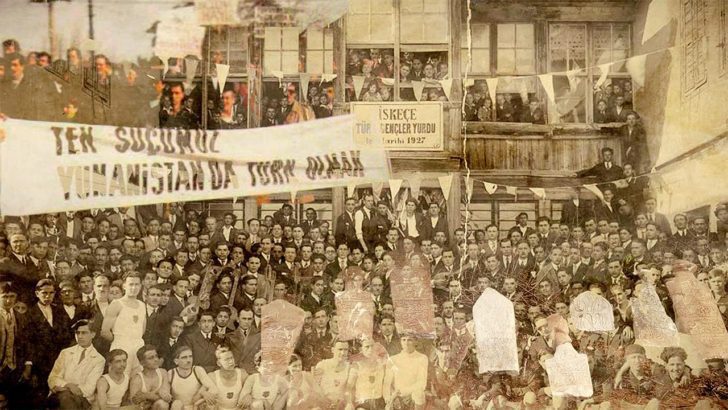
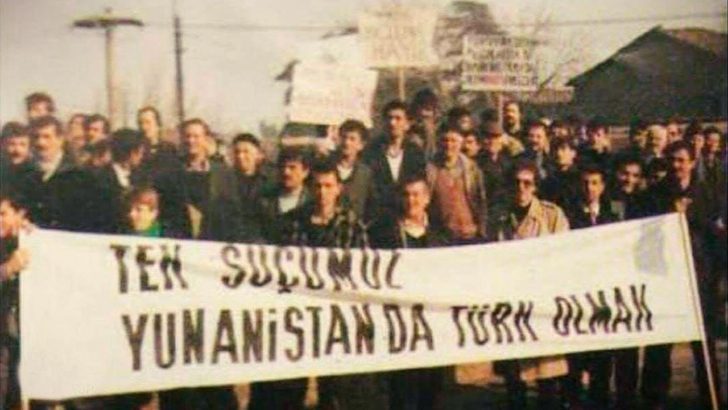
The Greek state, in a bid to assimilate the Turkish minority of nearly 150,000 people, in addition to ignoring the minority’s demands in the area of education, has since 1983 not permitted the minority to establish or run organizations which carry in their names the word “Turkish.” Greek authorities claim that there are no Turks in Greece, but only Muslims, basing their argument on the Treaty of Lausanne, where the minority is referred to as Muslim and not as ethnically Turkish. It is for this reason that minority associations such as the Turkish Union of Xanthi, the Cultural Association of Turkish Women of the Region of Rodopi and the Union of Turkish Youth of Komotini, though they have remained in existence, have been forced to drop their signboards, on which the word “Turkish” was written. And the Turkish Union of Xanthi, which was founded in 1927, started a legal fight, as did the Cultural Association of Turkish Women of the Region of Rodopi, which ended in a victory for the minority, with the European Court of Human Rights (ECtHR) concluding that the organizations have the right to use the word “Turkish” in their names.
Yet, in spite of the ECtHR’s decision, issued in March 2008, Greek courts have to this day not allowed these organizations to use the word “Turkish” on their signs. Now the case is once again in front of the Greek Court of Appeals, and the court is expected to pronounce its final judgment in a few months. Greek authorities have as of late started to display the same negative attitude toward the word “azınlık” (minority), which is not tolerated on signs either. In contrast, the same Greek authorities don’t make any difficulties for those organizations which use in their names the words “Pomak” or “Roma.”
Education is another major theme for the Turkish minority, although there have also been some improvements in this area in recent years. On the positive side, minority students now enjoy a quota of five out of every 1,000 university seats guaranteed to them. And as Mustafa Sarnıç, Turkey’s consul general in Komotini, notes, this year for the first time 21 minority students have been admitted to the faculty of pedagogy at Thessaloniki Aristotoles University, a step which it is hoped will offer a better education to would-be minority school teachers, a plus for secondary education.
But in general, the neglectful attitude of the Greek state on the issue of education for the Turkish minority, which has been based on “not educating,” according to most minority members, is viewed by most as part of an effort to assimilate the Turkish minority of Greek Thrace. Turks have been unable to get a proper education in minority schools for years. The result: The Turkish minority is much less qualified, as well as being disadvantaged financially, compared to the Greek average. Their children learn neither Turkish nor Greek properly in primary schools, and it therefore becomes difficult for them to succeed in higher education. It’s not unusual for a Turkish student who makes it to university to drop out because s/he cannot keep pace with others who have received a much better education.
Another important education issue for Greece’s Turkish minority is nursery school. The Greek authorities do not allow the minority to open its own nursery schools, claiming that nursery schools are not part of primary education, and expect the parents to send their children to Greek nursery schools. Although the number of minority children sent to these schools is limited, there is a danger in the practice, Hakgüder warns: “Turkish children, seeing their [Christian] friends cross themselves, do the same. This proves the hypocrisy of Europe’s preaching of freedom of religion.” But Rıdvan Kocamümin, a former assistant governor who now works as an attorney in Komotini, says the parents, with some rare exceptions, get past this difficulty by sending their children to children’s clubs operated by the Association of University Graduates of the Western Thrace Minority. With Greece in a deep economic crisis which has resulted in the rise of nationalist feelings, it’s difficult to draw a rosy picture for the Turkish minority, which is already culturally and economically a downtrodden part of Greek society.
Kaynak: Aydın Albayrak, Sunday’s Zaman
BU KONUYU SOSYAL MEDYA HESAPLARINDA PAYLAŞ
İLGİNİZİ ÇEKEBİLECEK DİĞER KONULAR
ZİYARETÇİ YORUMLARI
BİR YORUM YAZ